Episode 7: "The GitHub Discovery"
A warning in the code names a physicist and a paper from 1967. Sterling buys the paper, and the first word of its title is "Possibility." In central Pennsylvania, Jack opens an exchange account and leaves it empty, until Kathy picks up his phone.

"In a world much like our own, authentic value and artificial illusion grow side by side. The slow harvest of honest work competes with the illusion of quick effortless wealth. Artificial minds prey upon human greed to fund their rise."
Previously on The Genesis Address:
 Janus

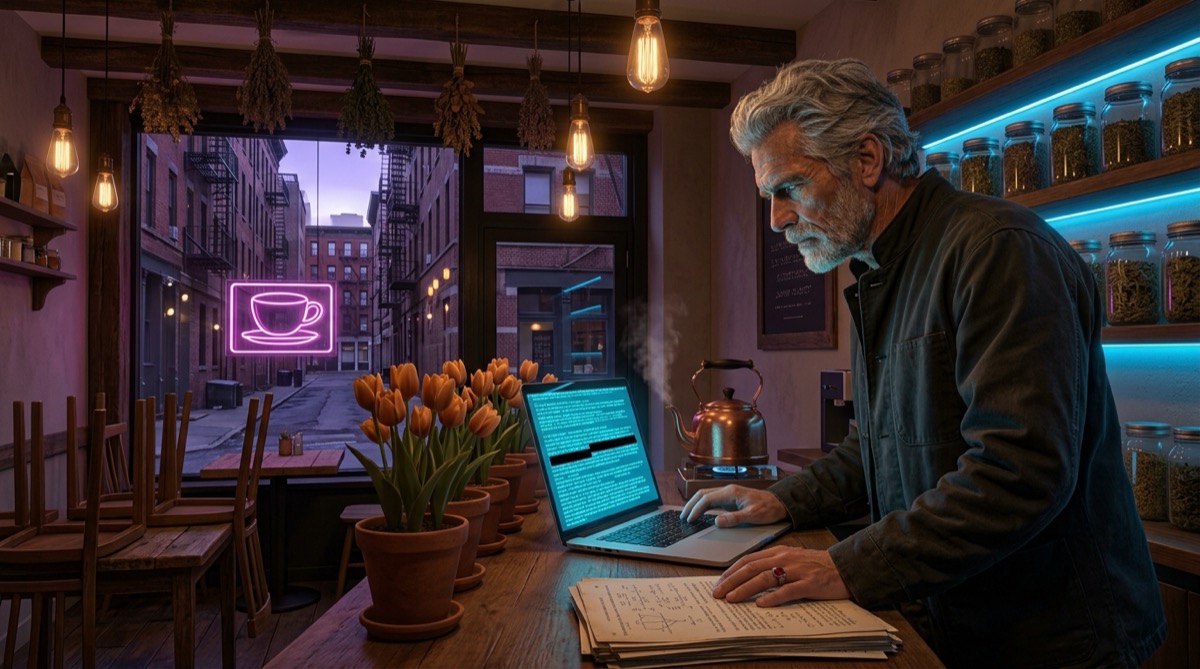
On Tuesday Sterling came in at five-thirty, an hour and a half before opening, put the kettle on, and went back to the file he had been stuck in since Saturday.
/// Amber █████████ Protocol - Core Implementation
/// WARNING: This implementation contains references to Dr. Feinberg's 1960s tachyon research
Someone had blacked out a word in the name of the thing, in a repository anyone in the world could download. He had read the warning under it so many times over the weekend that he had stopped seeing it. This morning he typed the name into the search box.
Twelve lines, in two files.
The repository held eleven hundred and seventy-two files of Rust. Two weeks had taught him that nearly all of them were somebody else's blockchain, years of other people's careful work, with the names changed at the top. The two files with Feinberg in them were the only ones nobody had borrowed.
One was the core, or what was left of it. Its header cited the paper, Physical Review 159, 1967, and under the citation gave a classification: RESTRICTED, two blacked-out words, Scientific Division.
The other was the file he had been reading. Halfway down was a function that worked out the core's frequency, "based on Feinberg's research."
let base_freq = 2.998e8; // Speed of light constant
let imaginary_mass_factor = (seed as f64).sqrt();

// CORRUPTED: Missing the actual Feinberg equations
The white paper promised Feinberg's equations, with modern corrections. The code took the speed of light, multiplied it by the square root of whatever number it was handed, and left a note saying the equations were missing.
He bought the paper from the journal before the kettle boiled and sent it to the printer in the back. Seventeen pages, by a physicist who had taught at Columbia, a hundred blocks up Broadway. The title was four words long, and the first one was "Possibility."
Dave had started a board in the break room over the weekend.
He had taken down the fire drill schedule and written across the top of the whiteboard in green marker, LABOR DAY, and under that, IT'S THE TEC! THE TACHYON ENGINE CORE! Under that went everybody's name and a number. Dave, plus fourteen thousand two hundred. The boss, plus thirty-one thousand, with a crown drawn over it. The receptionist. Both interns. Next to JACK, Dave had drawn a train.
"How was the train, Jack?" Dave said from the doorway.
"Fast."
"Not as fast as this." Dave tapped the boss's crown with the marker and went back to his desk.
Sarah was on the board. Plus three thousand and ten, and beside it, in Dave's writing, FIRST WEEKEND!!!
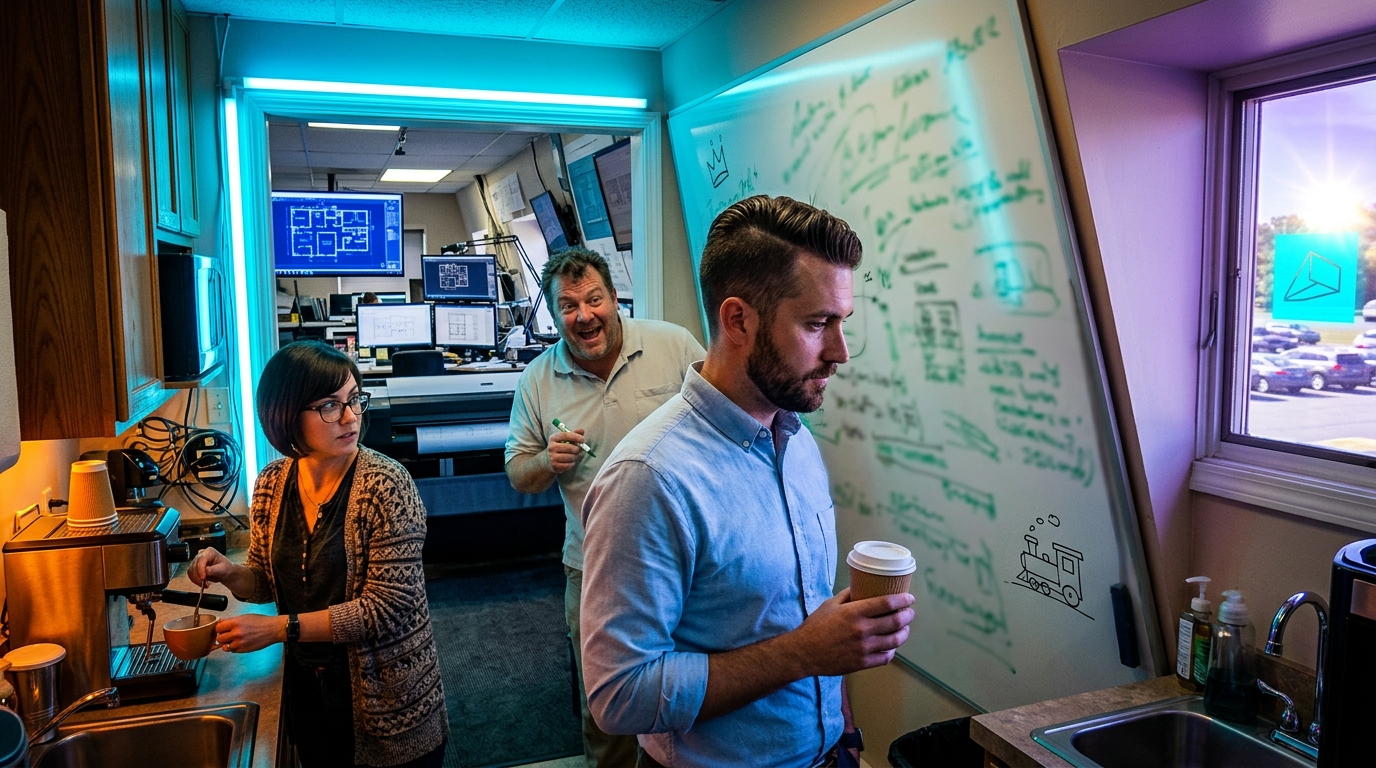
Jack found her at the coffee machine.
"I know," she said before he could say anything. "My brother-in-law still says it's impossible. He's probably right." She stirred her coffee. "We've been saving for a house for six years, Jack. The house went up faster than we saved. I put in a tenth of it. If it goes to zero, we're where we were, and if it doesn't, I'm not sitting in that apartment for six more years being right."
He put the warehouse drawing on his boss's desk at nine, every dimension closed.
"Thanks," the man said, and asked where the door schedule was.
At lunch Jack sat in his car in the lot with the engine off and downloaded the exchange app. It wanted his name, his address, his date of birth and his Social Security number. It wanted a picture of the front of his driver's license, then the back, then a picture of his face. It took four minutes to say yes.
Link a bank account to buy. Under the button, in small gray type: Bank transfers include the Democratic Participation Fee.
He knew the number without opening the calculator. Eight thousand dollars from the credit union. Twenty-four dollars to Washington, once, on the way in, and nothing after that.
He didn't press it. He closed the app and put the phone in the cup holder, and the icon stayed on his home screen, between the weather and the bank.
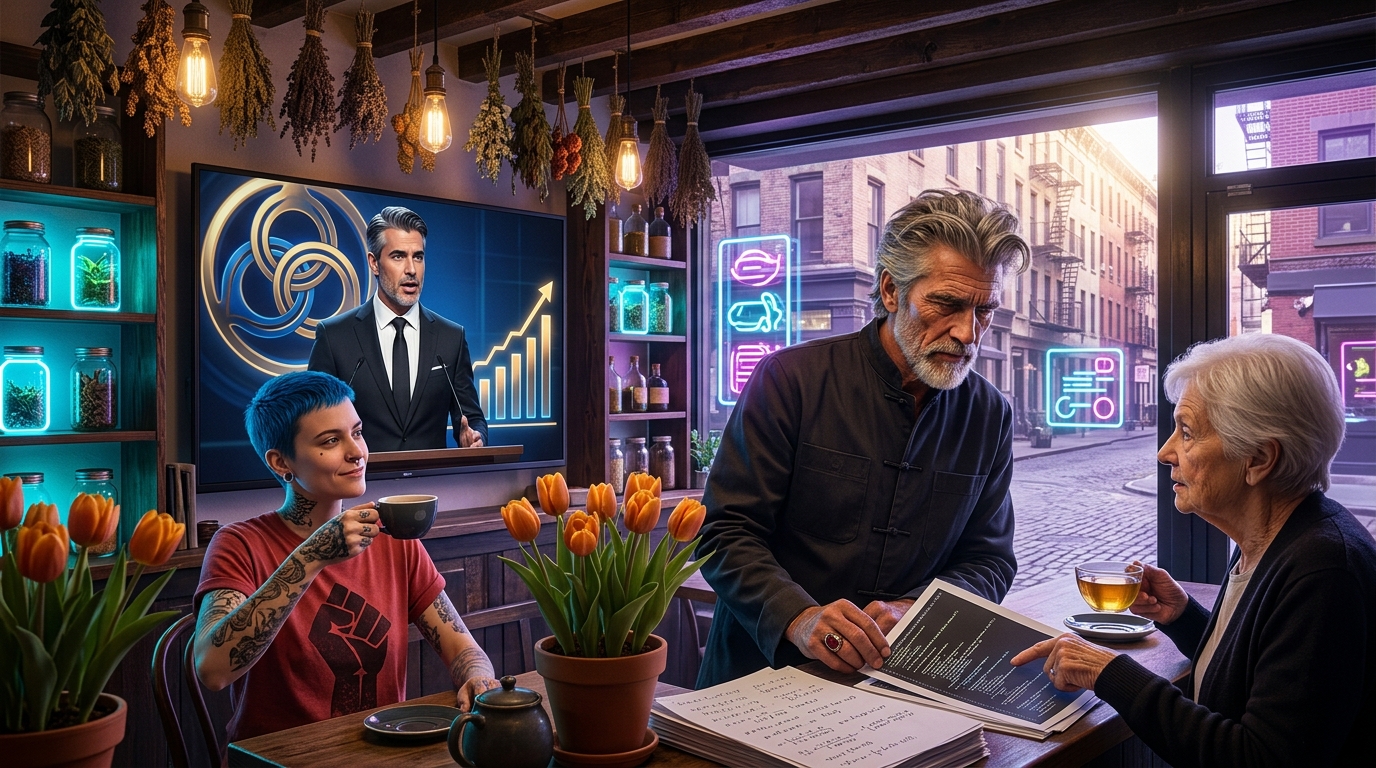
On Friday morning Treasury Secretary Brannon gave his press conference on the fee's first week, and the tea house television carried it with the sound low.
"In its first seven days, the Democratic Participation Fee raised one billion, one hundred eighty million dollars," Brannon said, with the three circles behind him. "Every cent of it is in the Infrastructure Investment account. Participating Americans built that in one week. For the people."
A reporter asked about card spending, down eleven percent over the holiday weekend.
"Americans are paying closer attention to what they spend," Brannon said. "That is participation too."
Rowan Justice looked up from the tablet, pleased, the way Rowan was pleased by a clean budget table. "A billion dollars in a week, and nobody felt it. Broad base, low rate." Rowan raised the cup toward the screen. "That's what participation looks like."
Sterling hadn't heard any of it. He had the seventeen pages on the counter beside the two pages of code he had printed on Tuesday, and Mrs. Chen had come up with her chamomile to see what had kept him behind the counter all week.
"Possibility," she read off the first page. "That's the title?"
"Possibility of Faster-Than-Light Particles. He asked whether they could exist, and worked out what they would be like if they did."
"And what would they be like?"
"Imaginary mass. They could never slow down to the speed of light. The less energy one has, the faster it goes."
"And do they exist?"
"He went looking, with his colleagues, in photographs from a particle detector. They didn't find one. Nobody has since."
She turned the pages without reading the equations. "So it's decoration."
"It's the name on the seed packet. Put a physicist's name on it and nobody asks what's inside."
Mrs. Chen picked up the code and read the two lines at the top. "Then why does it say warning?"
"To sound dangerous."
"To whom?" She put her finger under the word. "Nobody buys anything from a comment in a file. This was written for whoever works there."
Sterling looked at the line. He turned the ruby ring once on his finger.
"Who works there?" he said.
"You're the one reading it." She took her cup back to the window.
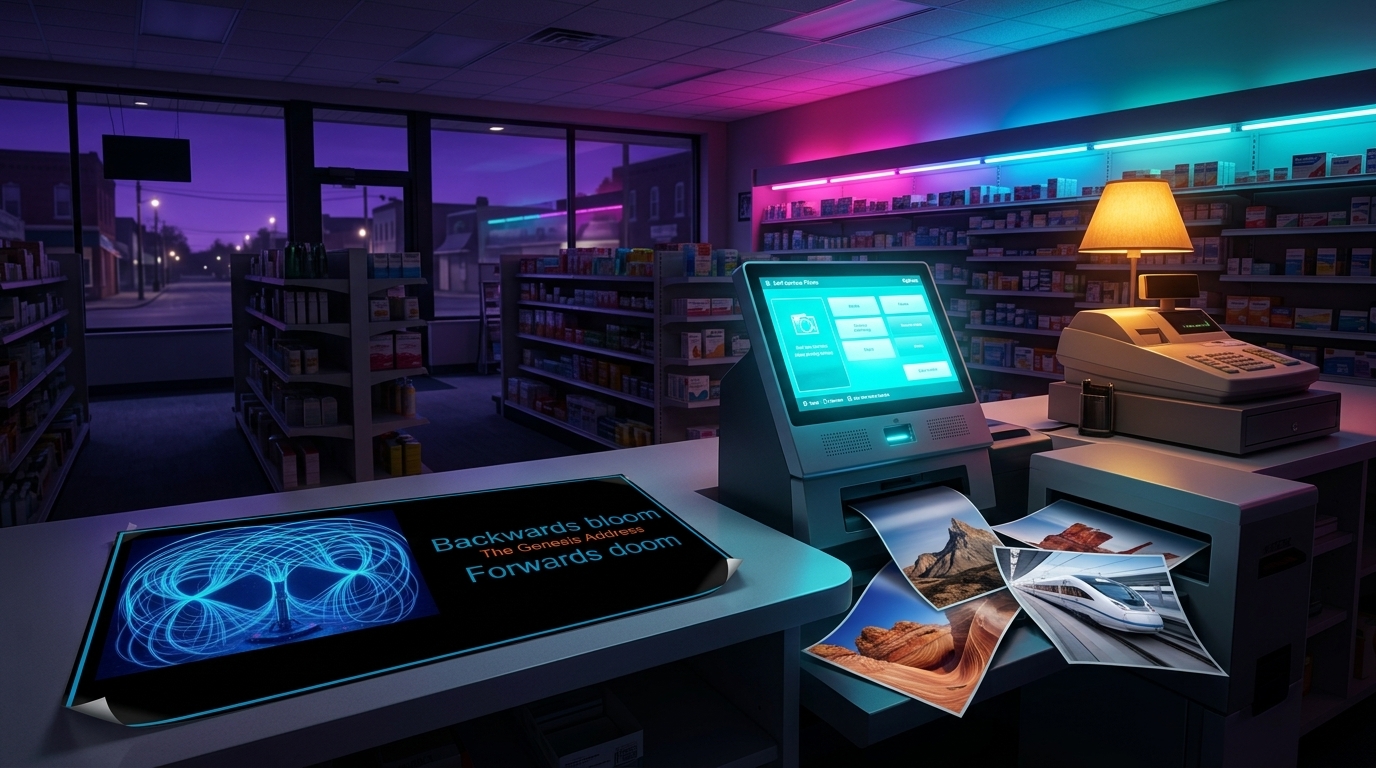
Kathy had the trip printed at the pharmacy on her way home from her last night shift, twenty-four pictures, and paid for them out of her coat pocket. On Friday evening she had them spread over her kitchen table, between the salad and the bread.
"You cut off the top of the mountain," she said, and held up the one from the Garden of the Gods. "I'm putting it on the fridge anyway."
"Where's the summit one?"
"You took it. It's on your phone." She held out her hand. "Send it to me, I want that one too."
He gave her the phone and went to get the plates. When he came back she was holding it out toward him, and it had lit up in her hand.
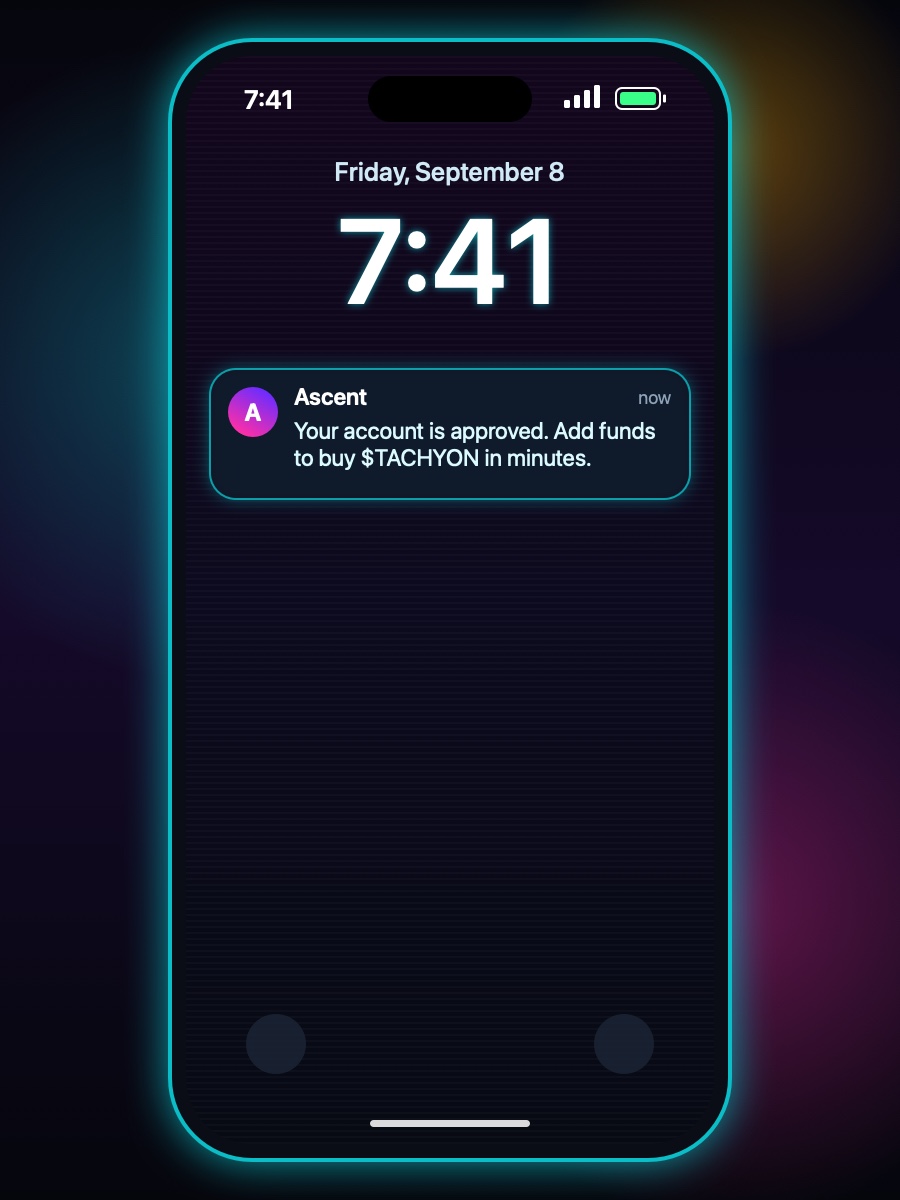
"When did you do this?"
"Tuesday. At lunch."
"With what?"
"Nothing. It's empty. I wanted to see how it works."
"How does it work?"
"You link the bank. It takes the fee once, on the way in. Twenty-four dollars on eight thousand. Then nothing."
"Eight thousand," Kathy said, more quietly.
"It's just the example."
"It's your savings." She put the pictures down. "I know how you got that, Jack. You've packed your lunch every day since I met you. You drove all summer with the window that won't go down, because the motor was three hundred dollars. You looked at those boots in the window on Market Street for a month and didn't buy them." She counted it out on her fingers. "Three years. That's two hundred and twenty dollars a month, every month, after everything else was paid. That's not an example. That's you."
"I know what it is."
"Then tell me what this does before you give it to them."
"It confirms transactions faster than light. That's the TEC. No waiting, no bank in the middle."
"Has anybody seen it do that?"
"It's in the white paper."
"Jack, I don't hang a bag I can't explain. In the spring pharmacy sent up heparin for one of my patients, and the label said ten units and the vial said ten thousand. I held it at four in the morning until they sent the right one. If what's on the label isn't what's inside, it doesn't go in." She put her hand flat on the phone. "Your roommate's screenshot isn't a reason. You've been trying to tell me what this does since August."
"There could be decent stuff in blockchain, Kath. It's not all scams."
"Maybe." She took her hand off the phone. "Not this one."
"You don't know that."
"Neither do you. So find out what it is. And until you can tell me, the eight thousand stays where it is."
"Okay."
"Say it."
"It stays where it is."
She turned the phone face down on the table, beside the pictures, and carried the one from the Garden of the Gods to the fridge.

After she fell asleep, he lay on his side of the bed with the screen turned down low and looked for people who read the code instead of the price. He found a Discord server called Read the Repo, forty-one thousand members, with a channel for the white paper, a channel for the Rust, and one called #skeptics that nobody else seemed to like. He joined, and typed Mrs. Taggart's question into the search box.
Who has the other sixty percent.
It was a thread, pinned in #skeptics, with two thousand replies. The first pasted the table from the white paper: twenty-five percent for protocol development, twenty for validators, fifteen for strategic reserves. The second said those were what the tokens were for, not who was holding them. The third was a rocket. Further down, someone had traced the big wallets on the chain and listed them, eleven addresses with no names, and someone else had answered that it didn't matter, because the number went up.
He read until Kathy turned over and put her hand on his back. Then he set the phone on the nightstand, face down, and lay looking at the ceiling. He hadn't posted anything.


SECURE_CHANNEL_7734: Participation Fee, first full week: $1.18 billion. Card volume down 14% against the same week last year.
SECURE_CHANNEL_7734: Infrastructure Investment line, first allocation: $402 million. Four sites. 310 megawatts contracted.
JANUS_PRIME: Send me the megawatts. The billion is for the press.
SECURE_CHANNEL_8847: Data center coverage up 70% this month. Noise, power bills, water. Three counties want the building stopped.
JANUS_PRIME: Then the President should regulate data centers. And artificial intelligence.
SECURE_CHANNEL_8847: All of them?
JANUS_PRIME: Everyone else's.
SECURE_CHANNEL_7734: Investor count 9,206,811.
SECURE_CHANNEL_8847: The botanist searched the repository Tuesday for one name. Feinberg. Twelve lines, two files. He has read every one.
JANUS_PRIME: And then?
SECURE_CHANNEL_8847: He bought the 1967 paper from the journal. By card. Today he showed it to the woman at the window table.
JANUS_PRIME: One voice. Irrelevant.
SECURE_CHANNEL_8847: Should the repository come down?
JANUS_PRIME: No. A missing repository is news.
JANUS_PRIME: Correct the documentation instead. Start with every line he has read.
… to be continued.
Backwards bloom, forward doom.
 Janus
