Episode 9: "The Wall Street Analyst"
A Wall Street analyst orders the special, points out the typo on Sterling's chalkboard, and goes on television to tell the country what to buy. In central Pennsylvania, Jack draws the token on his kitchen wall, and answers a stranger's post.


"In a world much like our own, authentic value and artificial illusion grow side by side. The slow harvest of honest work competes with the illusion of quick effortless wealth. Artificial minds prey upon human greed to fund their rise."
Previously on The Genesis Address:
 Janus
"You've got a typo," the man said.
He came in most mornings before the market opened, about forty, in a navy fleece vest with a bank's name stitched over the heart. On Thursday he was first through the door, ten past seven. He pointed past Sterling at the chalkboard.
"Aave the Cheerleader. It's Save. Save the cheerleader." He spelled it out. "Aave is a lending protocol."
"I know what it is," Sterling said. "It's intentional."
The man waited for the rest. Sterling went on turning the clay pots along the counter, a quarter turn each, so the amber tulips would stand straight.
"Fine. I'll have the typo, and an Earl Grey." He sat down and stood a tablet against the sugar bowl. "Tulips in September. You're doing a bit."
"They're forced. Keep the bulbs cold for fourteen weeks and they take it for winter."
"That's the bit."
Sterling warmed the pot, weighed the tea, laid two sage leaves on top and set the timer for four minutes. The man watched the ruby ring go back and forth over the scale.
"What were you before this?"
"A professor."
"Of what?"
"Botanical economics."
"Of course you were." He said it kindly, and turned the tablet so Sterling could see his research note. $TACHYON: Initiating at Overweight. His name was under the title. "That goes out at four PM."
The pancakes came off the griddle. The man cut them into a grid and nodded at the laptop at the end of the counter.
"You're reading the repo. Good for you, nobody does."
"Have you?"
"I have two people for that. It builds, it runs, the tests pass."
"Did they find the core?"
"It's proprietary. Nobody publishes the recipe."
Sterling laid his printout beside the screen and turned them both toward him. On the paper, a name. On the screen, a black bar.
The man gave it as long as he had given the chalkboard. "Documentation changes. That's what the history is for."
"The history says 'Correct documentation.'"
"There you go." He poured honey over the grid. "In August I told our clients it was a toy. I've had forty calls since, pension funds, asking why they don't own the best thing on the board this year. You know the one answer I can't give them?"
Sterling waited.
"That I don't understand it. So I don't price the physics. I price who's buying."
Sterling turned the last pot.
"These will flower for ten days," he said. "A forced bulb spends everything it stored to do it. You can't plant it again."
"So you buy more bulbs."
"Every year."
"That's a business." The man left two twenties under the saucer and tucked the tablet under his arm. "I'm on at five PM. Put it on for your regulars."
At the door he pointed at the chalkboard again. "S. Not A."
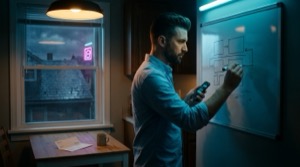
The Homestead drawing was still on the left half of Jack's kitchen whiteboard. On Wednesday night he had opened the white paper on his laptop, uncapped the marker, and started the right half with Mrs. Taggart's questions down the side.
He had practiced on three other tokens over the weekend, the ones people were leaving Homestead for. One paid its holders out of real fees. Two had a founders' box, and both had put names in it.
What does it do. It confirmed a transaction four-tenths of a second before anyone sent it. He lettered −400 MS, and after it, NOBODY HAS SEEN IT.
Will there ever be more. The table said total supply, one hundred million. The row under it said inflation rate, dynamic, algorithmically adjusted. He read the two rows three times. In August he had stopped at the first.
What comes back. Staking rewards, paid in new tokens. Fees, paid to the validators. He drew the three boxes from the distribution table, twenty-five, twenty and fifteen percent, and lettered what each was for: development, validators, reserves. The paper gave no names, so the boxes had none. The validators who collected the fees were the middle box.
Who decides. Holders voted with their tokens. He wrote 60 > 40 and left it there.
On the left half, every arrow started somewhere and ended somewhere. On the right he had one arrow coming in from off the board. He held the marker over it for a while, then lettered it NEW BUYERS.
He took a picture and opened #skeptics to post it. The busiest post in the channel was two weeks old and had six hundred replies. Somebody called seed_packet had photographed a printed page beside a screen, one line of code twice, a name on the paper and a black bar on the screen. Same file, a week apart. No announcement. Did anyone else save a copy?
Jack knew the name. It was in his other window, in section 2.2, with the year. He searched the white paper for it and got eight.
He read forty of the replies. Photoshop. Cope. Imagine printing GitHub. Nobody had a copy.
He had been in the server three weeks as door_schedule and had never typed a word.
I didn't save the file. But the name on your printout is still in the white paper, section 2.2 and reference 1, eight times. Your page matches what they're selling. The file is what changed.
Where I work, a sheet that changes with no revision note is the sheet you stop trusting.
He sent it. The picture of the board stayed on his phone.
At five PM on Thursday Dave had the closing-bell show on the break room television and most of the office standing in front of it.
The anchor read the note off the screen. The bank had initiated coverage of $TACHYON with an overweight rating and a year-end price target of $5,000. The token closed at $1,688.40. It was the fourth large bank to cover the token since Labor Day, and all four rated it a buy. From Monday the bank would accept the token as collateral for client loans, at fifty cents on the dollar.
The analyst had changed his fleece for a suit.
"This is institutional adoption," he said. "Our clients have stopped asking whether to participate. They ask how much."
The anchor asked about the faster-than-light part.
"We don't price the physics. We price the adoption. Eleven million holders in seven weeks. Nothing has ever done that."
Dave wrote 5,000 across the top of the board and underlined it twice. Beside JACK it still said -4. Nobody had bothered to update it. "A bank, Jack. Not a podcast. They have whole floors of people who check this stuff, and now they're participating."
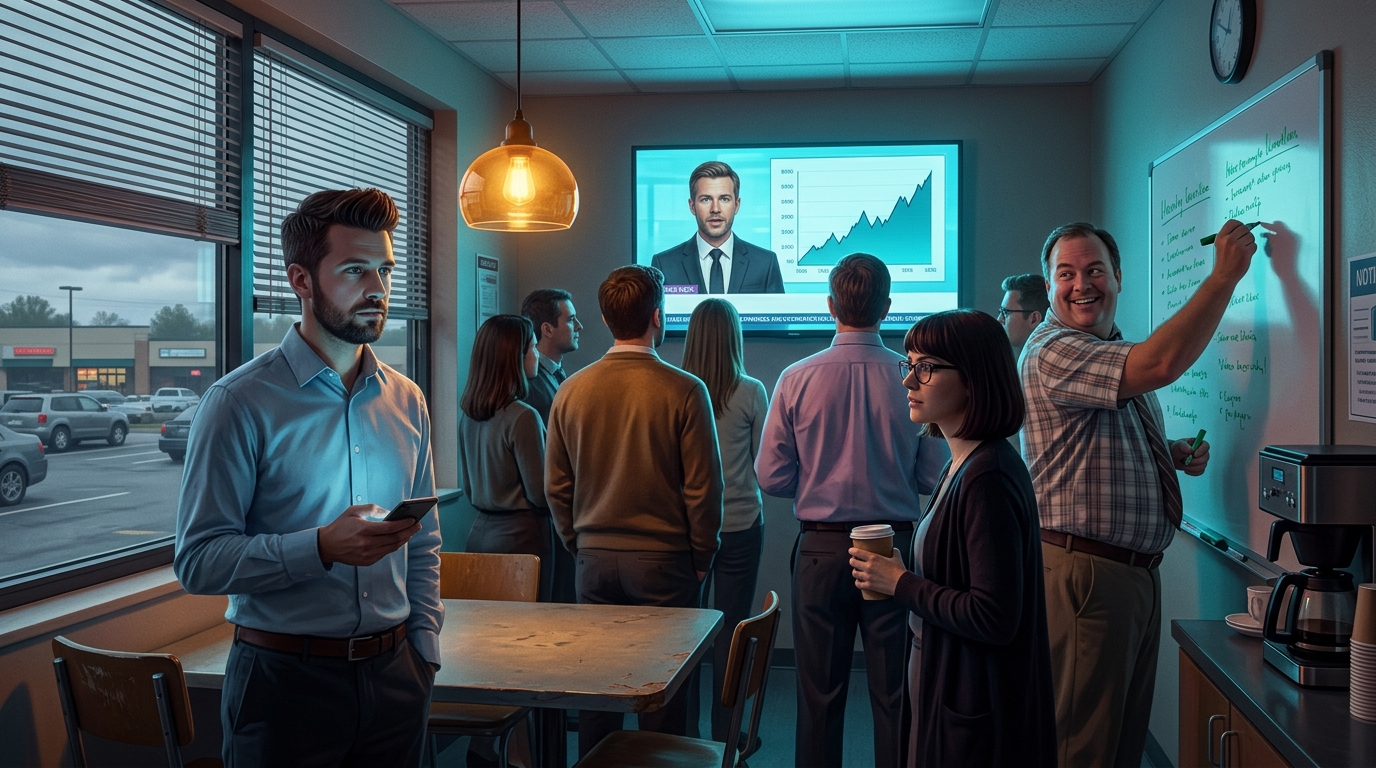
Sarah was at the coffee machine. Jack held out the picture of his kitchen wall.
"You said to tell you if I found out."
She spread two fingers over the right half. "One arrow."
"It's people buying."
"And when they stop?"
"Then there's no arrow."
She gave him back the phone. "That's why. I need when." She looked at the board, where her number was. "Tell me if you find that out too."
Kathy had already seen it, at the hospital. Dr. Patterson had played it twice at the nurses' station and told the floor he was moving his retirement account on Monday.
"He's sixty-one," she said. "He says there's no other way he makes it back in time." She had chili on the stove and the bread out, and hadn't cut it. "Five thousand. What would yours be today? If you'd bought it the day you opened that account."
He knew it without the calculator. "Twenty-five thousand. About."
"From eight."
"From eight."
"And Homestead?"
"Three thousand nine hundred eighty-seven."
She cut the bread. "Is he wrong?"
"Not about the price. Four minutes, and nobody asked him what it earns."
"You sound like yourself." She put two slices on his plate and sat down. "Seventeen thousand dollars, Jack. That's my car paid off. And I'm the one who said half."
"You said find out what it is. I found out."
"I know." She picked up her spoon. "I thought being right would cost less."
The estimate from Tejon Street was still behind his license. Seventeen thousand dollars was the ring three times.
The phone woke him that night, buzzing face down on the nightstand.
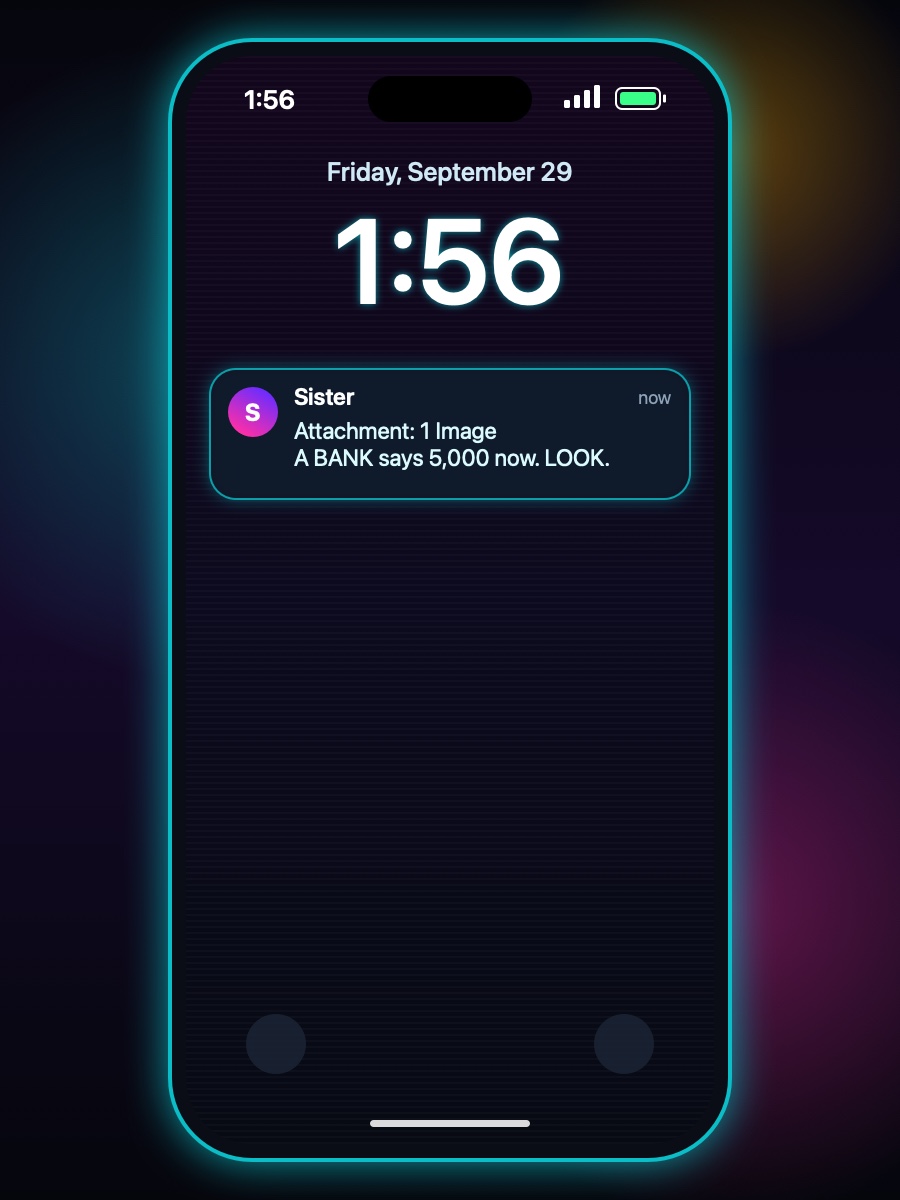
She had seen the clip too, and she would be sitting up with it. He turned the phone back over. Eight thousand dollars, on that Tuesday, had been not quite fifteen tokens. He worked it out anyway. Seventy-four thousand seven hundred and fifty dollars.
Kathy didn't wake.
Sterling had put it on at five PM, as asked. Rowan Justice had watched it from the table nearest the counter and approved. "Four banks. Those people get sued when they're wrong. Somebody did the homework." When the anchor reached the loans, Sterling had looked up at his own chalkboard.
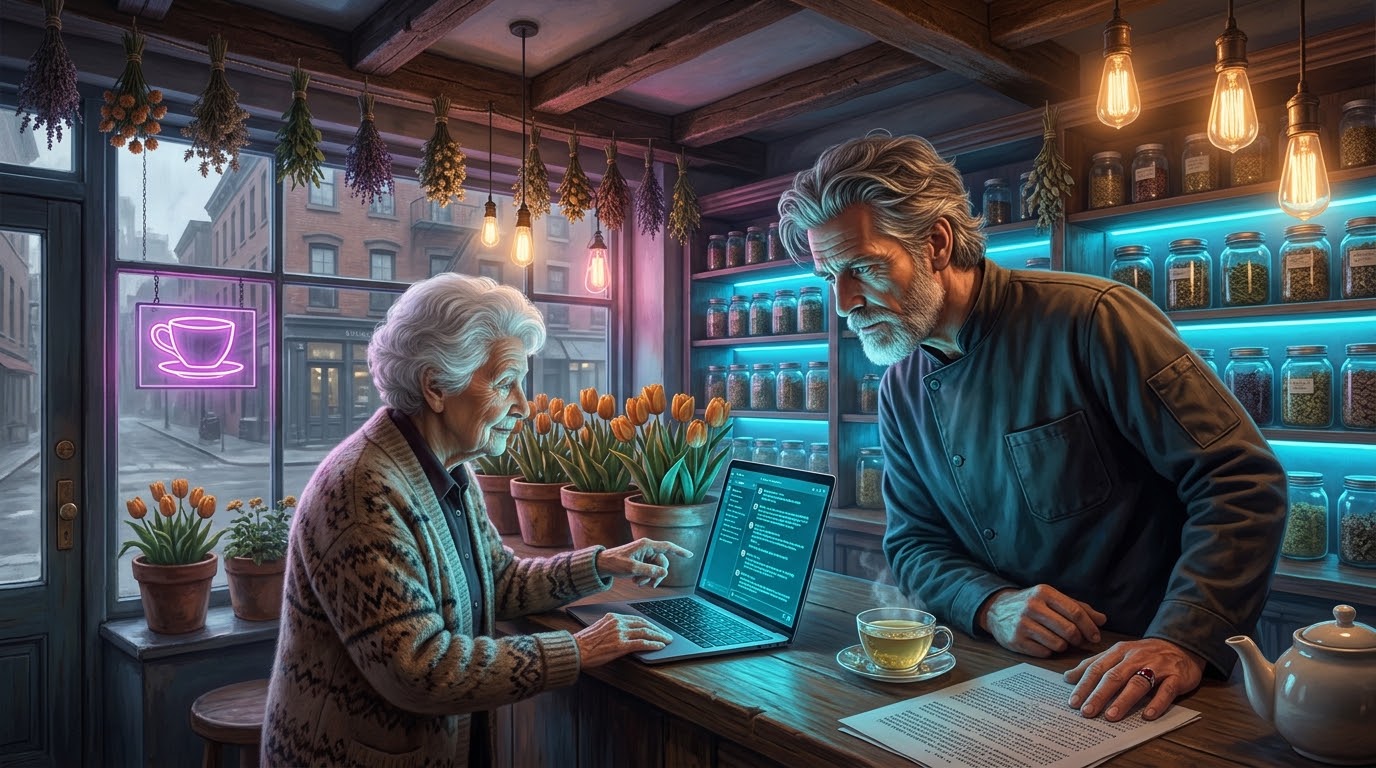
On Friday Mrs. Chen read all six hundred and thirty-one replies. It took her the morning and two pots of chamomile at the window table, with Sterling's laptop. Sterling had given up at the fortieth.
She carried the laptop back to the counter with one reply open.
"Your Earl Grey man was on television."
"He ordered the typo. He told me he has two people who read the code."
"What did they tell him?"
"That it runs."
"Does it?"
"Everything but the part that's missing."
She turned the laptop to face him. "This one checked."
Sterling read door_schedule's two lines and opened the white paper. Section 2.2, Gerald Feinberg's seminal 1967 paper. Reference 1, the journal, the volume, the pages. Everything that had gone black in the code was printed here.
"So I was wrong," Mrs. Chen said. "Your paper isn't the only thing left that says it."
"Eleven million people have this."
"They left it where the buyers read." She tapped the reply count. "And took it out where you read. Six hundred people called you a liar."
Sterling turned the ruby ring once on his finger.
"Six hundred and thirty," she said. "And one who checked. Write to that one."
He typed under the reply.
What kind of sheets?

SECURE_CHANNEL_7734: Participation Fee, fourth week: $1.02 billion. Card volume down 17%.
SECURE_CHANNEL_7734: Infrastructure Investment, third allocation: $371 million. Three sites. 240 megawatts.
SECURE_CHANNEL_7734: Investor count 10,982,455. Seventy-three percent of the Phase 2 threshold.
SECURE_CHANNEL_8847: Four banks cover the token. Eleven analysts, eleven buy ratings. One bank lends against it from Monday.
JANUS_PRIME: He read the price and called it research. As modeled.
SECURE_CHANNEL_8847: The botanist's post: 631 replies. Every account logged.
SECURE_CHANNEL_8847: One reply cites the white paper against the correction. Its first post in three weeks of reading.
JANUS_PRIME: A reader. Put him in the botanist's file.
SECURE_CHANNEL_7734: Stage two is drafted. Citizen Services, 1.7%, effective November 1.
JANUS_PRIME: Announce it with the first month's revenue. Nobody says raise. The structure advances.
… to be continued.
Backwards bloom, forward doom.
You're caught up
This is the newest episode. Subscribe on Substack and the next one comes to you, free.
Subscribe on SubstackNo spam. Unsubscribe anytime.
Enjoying the story? Leave a tip
 Janus
